The Chancellor of Hebron Christian University, Florida, United States, Bishop Bankole Jefferson, has urged Christians in Nigeria to stop standing aloof from governance and partisan politics, stressing that their active participation is crucial to the nation’s future.
In his recent lecture aimed at sensitizing believers on their civic responsibilities ahead of the 2027 general elections, Jefferson noted that the Church must move beyond the pulpit to play a more active role in shaping the political and leadership landscape of the country.
Jefferson, who also serves as the Presiding Bishop of Mercy Tabernacle, Ogba, Lagos, explains in this interview with Christian Benefits why Christians must take deliberate steps to participate in governance and politics ahead of the 2027 election. Excerpts below.
How would you like us to introduce you, sir?
You may introduce me as Bankole Jefferson, the Bishop of Mercy Tabernacle and also the Chancellor of Hebron Christian University. We (the university) are currently based in Florida, United States, but we are working towards expanding our presence into Nigeria.
Some time ago, you shared with Christian Benefits about Hebron Christian University. Please tell us again about the vision and mission of the university.
Hebron Christian University is an online Christian university registered in the United States. Our vision is to bring clarity to the doctrines and knowledge of Jesus Christ. Recently, we have seen many different doctrines circulating, and it has become necessary for institutions that can clearly teach and empower believers with sound knowledge of Christ. That is why we came into existence—to contribute our own quota to the body of Christ.

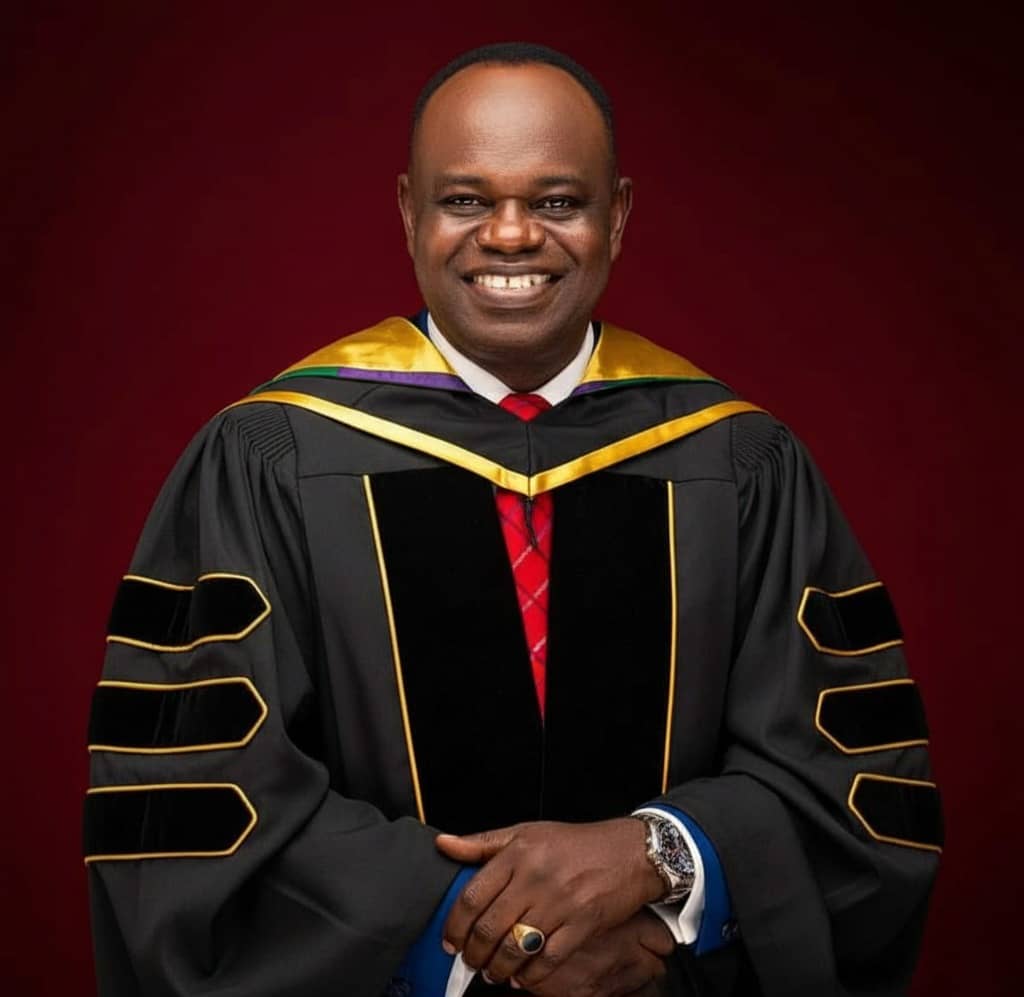
Recently, you delivered a lecture on the Renewed Hope Agenda and the inclusion of the Church organized by the university. Kindly summarize the central message of the lecture and what inspired it.
The lecture was essentially a call for Christians, particularly in Nigeria, to arise and become actively involved in the transformation of our nation. We cannot remain passive observers. We must join the chariot of national transformation. Christians have often played a quiet role in politics, but the time has come for us to participate more actively and responsibly
You mentioned in your lecture that it was not a political endorsement, even though you used the campaign mantra of the ruling party, “Renewed Hope Agenda,” as the topic of the lecture. Can you please clarify that?
Yes, it was not an endorsement. However, we must acknowledge the truth when we see it. A few years ago, Nigeria was in a very difficult state. From what I have observed, efforts are being made to stabilize the nation. It is like being in a surgical room where broken bones are being mended and the body is gradually being restored. Recovery takes time. When someone who was in a coma begins to breathe again, we celebrate that progress. In the same way, Nigeria is gradually recovering.
Apart from you, who are other promoters of the university?
The university has a faculty largely based in America. Most of our professors are in the United States, but we also have some faculty members and partners here in Nigeria who support our operations.
What are the benefits of studying at Hebron Christian University?
One of the major benefits is convenience. We bring the knowledge and teaching to students wherever they are, allowing them to study at their own pace and comfort since it is an online system. Another advantage is affordability. We aim to make education as accessible as possible. Ideally, we would love to make it completely free, but running academic programmes requires some resources. Therefore, we charge only a token.
What is the duration of the university programmes?
It depends on the student’s pace since the programmes are online. A student may complete a programme in one year or two years, depending on how quickly they are able to progress through the courses.
What are the basic requirements for admission?
The most important requirement is the willingness to learn. Once we discover a genuine desire in a student to grow and learn, we can guide and support them from wherever they are starting.
Many pastors traditionally shy away from politics. What is your view about Christians or pastors in politics?
Every human being is a political being, whether they realize it or not. Politics affects everyone. Policies made by government leaders affect our daily lives, whether we like it or not. Therefore, Christians should not isolate themselves from political engagement. Instead, we should participate responsibly and use our influence positively.
Some people say what we have are “Christian politicians” rather than “Christians in politics.” Is there a difference?
The line is very thin. My joy is simply that the Christian is inside. When someone truly knows God, even if they make mistakes, they are not completely lost. Ultimately, everyone will give account of their life before God. So my position is not to judge them. Their accountability is before God.
During the last general election in 2023, the church as a body participated actively for the first time. Do you think the church is prepared for the 2027 election and other future elections in the country?
The last election showed some encouraging signs of awakening among Christians. However, we must become more intentional. Every Christian should obtain a voter’s card and perform their civic responsibility. Politics is a game of numbers. If Christians participate in large numbers, they can influence the direction of the nation.
The Church members often belong to different political parties, which can create divisions. How can the church manage this?
The Church cannot force members to support a particular political party. However, the Church can educate members about policies and agendas. Christians should vote based on what promotes peace, protection, and prosperity, not based on tribal or ethnic sentiments.
What is your take on pastors leaving the pulpit to contest political offices?
Some pastors may genuinely believe God has called them into politics to make a wider impact. Politics allows leaders to influence policies that affect millions of people. For example, a pastor may give scholarships to 1,000 students. But if that same person becomes president and implements a policy for free education, millions of students will benefit. That shows the power of policy.
What advice do you have for Nigerians as we approach the 2027 elections?
My advice is simple: every Nigerian should participate peacefully and responsibly in the electoral process. People should vote without violence or bitterness. We should also pray for the nation and for our leaders. Ultimately, Nigeria will overcome its present challenges and move toward a better future.
Finally, what more should people expect from Hebron Christian University regarding political awareness?
We will continue to educate and sensitize Christians on their civic responsibilities. I plan to take this lecture series to various states across Nigeria. Our aim is not only to teach about Christ but also to equip believers with the knowledge and tools to engage responsibly in governance.


