
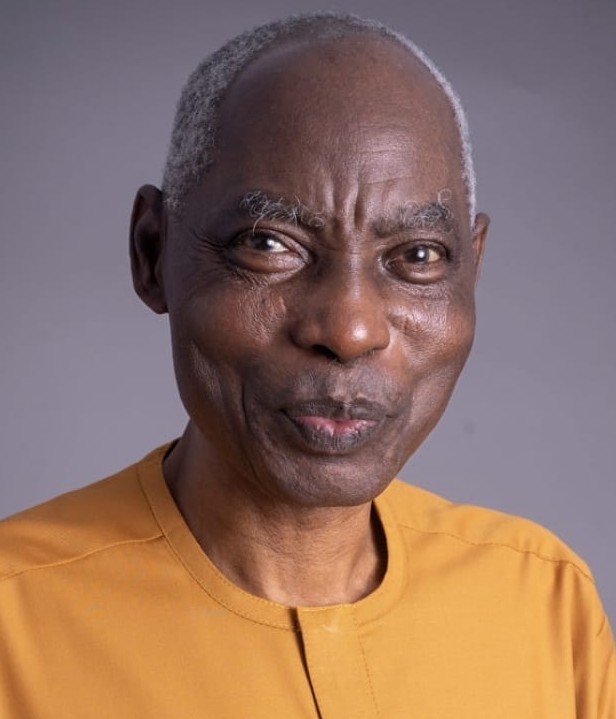
Rev. Samuel Oluwatunji Oluwatunbi, the over-70-year-old Founder of Christ People Assembly, has appealed to fellow church leaders to allow unity and love to reign among them instead of envy and strife. The veteran preacher, while sharing his salvation encounter with Christian Benefits magazine, remarked that despite the negative perceptions of the Church in Nigeria today, particularly on social media, the Church is emerging into greater glory. Below are some excerpts from the interview.
How would you like us to introduce you, sir?
My name is Rev. Samuel Oluwatunji Oluwatunbi. I am the Founder and President of Christ People Assembly; a church with the world as our parish. We also refer to the church as Christ For All People Ministry. I am an architect by profession. After practicing for 35 years, I eventually transitioned into full-time ministry alongside my wife.
Before your call to ministry, can we have a look at your background, including your salvation encounter?
I was born into an agrarian family and grew up working on the farm with my father. I attended school during the week and spent weekends on the farm. At the time, I did not realize that this routine was part of a divine orchestration of my destiny. One day in 1971, while returning from the farm, I passed by an Anglican church in my village. I noticed a piece of paper posted on the wall and stopped to read it. It contained two Bible verses and an invitation to a fellowship. One of the verses read: “Come now, let us reason together” (Isaiah 1:18). The second was: “Come unto me, all ye that labour and are heavy laden, and I will give you rest” (Matthew 11:28). These scriptures became my spiritual birthday verses. Even as a young person, I sensed a deep restlessness within me. When I saw that invitation, I responded and attended the fellowship. That day, the message centered on salvation, and I gave my life to Christ. For the rest of 1971, I immersed myself in the study of the Bible. By January 1972, our fellowship leader had relocated to Lagos, leaving me to assume leadership responsibilities. Less than a year after my conversion, I found myself functioning as both a preacher and a leader.
How would you describe your walk with Christ from 1971 till now?
In my early years, I experienced a strong pull toward my former life. For about four years after my conversion, I went through intense spiritual battles, with persistent attempts by the devil to draw me back into darkness. It was only by God’s grace that I remained steadfast. After completing secondary school, I gained admission into a missionary college for the Higher School Certificate (HSC). That period marked a significant turning point, giving me a spiritual edge. I joined the Christian Students’ Fellowship and became one of its leaders. Within a year, I gained admission into Ahmadu Bello University (ABU), Zaria, where I studied agriculture. I spent six years there, and that phase became a defining period in my spiritual journey. It was during this time that my commitment to Christ deepened, and I also met my wife through fellowship activities.
Who were some of your contemporaries in the faith when you accepted Christ in 1971?
I would describe many of them as senior brethren rather than contemporaries. I had interactions with Bro. W.F. Kumuyi, Pastor E.A. Adeboye, Pastor Tunde Bakare, and Bishop David Oyedepo, though Bishop Oyedepo is closer to my contemporary in the faith. Among my school contemporaries were Moses Adepoju and others. My closest friend was James Babatunde. I am naturally reserved, so most of my friendships came through him. Others in that circle included Segun Agbelusi and a few more. After completing my university education, I visited Bro. Kumuyi at his residence (Flat 2) at the University of Lagos. That visit marked the beginning of our relationship, and we began exchanging visits. I remember when his first child was born, I visited him, and he joyfully showed me the newborn. My commitment to fellowship also brought me into close contact with Pastor Adeboye and Pastor Tunde Bakare. In those days, I regularly held personal retreats at the Redemption Camp. After completing seven-day fasting and prayer retreats, I would visit Pastor Adeboye at his residence for fellowship and interaction. I also had the privilege of presenting my thesis to Bro. Kumuyi after my university education.
You assumed leadership roles shortly after your conversion. When and how did you receive the call to ministry?
I have often reflected on that question: where, when, and how I received the call to ministry. It was not a single dramatic moment. However, about four years after my conversion, I began functioning in ministry as a teacher. From there, the journey continued, with various transitions along the way. We started as a small fellowship in my village in Kwara State. Even after relocating to Lagos following my university education, the fellowship continued, interestingly, without a formal name at the time. Along the way, I called on some other brethren and invited them to come and build the fellowship with me. We set up a committee, and the committee came to the conclusion that what we were doing had grown beyond a fellowship into a ministry. Yet, we did not belong to any church denomination. We did not conduct baptisms, but we related with other churches. At that time, the fellowship was known as Fellowship of Christian Students (FCS). Apart from myself, other leaders of the fellowship included Emmanuel Oladipupo. However, the time came when we transitioned from a fellowship into a ministry known today as Christ for All People Ministry. At that stage, we still chose not to belong to any denomination. Instead, we focused on partnering with ministries and churches that could accommodate us until the defining moment when we would establish a church. What led to the eventual planting of the church was that the converts we handed over to some churches were not properly followed up. That was how the Lord led us to stand as a denomination, and we became known as Christ People Assembly in 1987
What is the focus of the ministry upon its transition from a fellowship to a church?
The focus is in the name: Christ People Assembly, also known as Christ for All People Ministry; a church with the world as its parish. Our focus is the expansion of the Kingdom of God.
What are some of the church programs that align with this focus?
We hold regular services, train believers, and engage in evangelism. Along the way, the Lord called me into a writing ministry. I have written and published several books, with a major focus on devotionals. The aim of these devotionals is to further expand the Kingdom of God through impactful content and, by God’s grace, to reach the unreached.
Share with us some of the impacts and testimonies of the church since its inception in 1987.
The impacts and testimonies are too numerous to count. However, to the glory of God, we have witnessed the raising of the dead, healing of the sick, and remarkable answers to prayers. God has put the devil to shame in many lives and in the church as a whole. The preservation of my life is also a testimony. The work continues to grow in glory. We have many spiritual children, and the Lord is blessing us through them. Daily, we experience miracles, signs, and wonders. We consistently witness the reality of God’s presence, His mercy, and His mighty move in our midst.
What is the strength of the church today in terms of branches?
As of the last count, we have eleven branches spread across Lagos and Ogun States. In Lagos State, we have branches in Mushin, Ojota, Orile, Badagry, and Lagos Island, among other locations.
As one of the fathers in the faith today, how do you see the state of the Church in Nigeria today compared to when you were growing in the faith?
The Church in Nigeria is emerging into a greater glory. There is increasing tolerance and appreciation among believers today, and these are values I strongly desire to promote in the body of Christ. There is no reason for fighting or envy among us. When Bishop David Oyedepo began to rise, it seemed to some that he was on the wrong path. Despite criticisms, his ministry continues to expand. I knew him personally. We shared close moments, and he visited me with his wife a couple of times. This is why I believe ministers of God should not fight one another. The unity of the body of Christ in genuine love and oneness is a legacy I desire to leave behind. We must respect and love one another. Recently, I attended the Holy Ghost Service of the Redeemed Christian Church of God (RCCG) for the first time in 30 years. The transformation I saw at the Redemption Camp is clear evidence of God’s glory in that place. We do not need to criticize or envy one another. I do not criticize people; rather, I rejoice with them. The Bible teaches us to rejoice with those who rejoice. When any household of God is lifted, we should celebrate it. Our real enemy is the devil; not one another. The Bible also instructs us to honor others above ourselves. We are all building blocks in God’s church, members of the same body. I detest strife, envy, and division in the body of Christ. Instead, we should support one another. In the past, genuine believers were often despised and seen as failures; people who could not succeed in life. When I built my house in the village, many found it hard to believe. But today, things have changed. Now, there are ministers of God whose voices are heard at the highest levels of leadership. Some no longer need to struggle for access to national leaders. Is that not a joyful development? This is truly the season of the manifestation of the sons of God.