

Introduction
Loyalty is a godly virtue that strengthens families, organizations, and the Church. However, it must be properly balanced. While God alone deserves absolute loyalty, believers are also commanded to honour and faithfully serve those He has placed in authority over them. Loyalty to leaders should never replace loyalty to God but should flow from it.
Some argue that Christians need only be loyal to God while simply carrying out the assignments of their leaders. Scripture, however, presents a fuller picture: genuine faithfulness to God produces respect, integrity, and loyalty toward legitimate authority, except where such authority contradicts God’s Word.
God Alone Deserves Absolute Loyalty
Jesus commanded believers to love God with all their heart (Matthew 22:37), while the apostles declared, “We ought to obey God rather than men” (Acts 5:29). These passages establish that God alone deserves our highest allegiance. Every human authority is delegated and remains accountable to Him. Whenever human commands conflict with God’s will, obedience to God must come first.
Faithful Stewardship Requires Loyalty
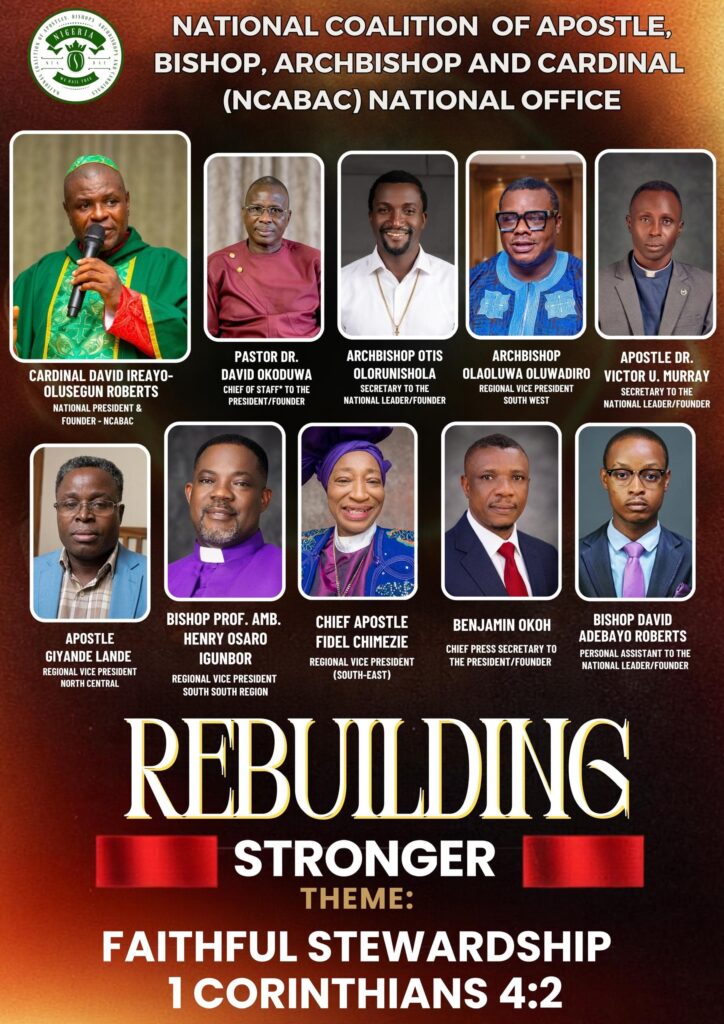
The NCABAC theme, “Rebuilding Stronger Through Faithful Stewardship,” reflects the biblical principle that “it is required in stewards, that a man be found faithful” (1 Corinthians 4:2).
Every believer serving under authority is a steward. Faithfulness is demonstrated not only in prayer and worship but also in the way we discharge our responsibilities. A gifted but disloyal servant is not a faithful steward. Biblical stewardship therefore requires both:
- Vertical loyalty—absolute faithfulness to God.
- Horizontal loyalty—faithful service to God-appointed leaders.
Loyalty to Leaders Is a Biblical Duty
The Bible repeatedly instructs believers to obey and respect those in authority (Colossians 3:22; Titus 2:9; Hebrews 13:17; Romans 13:1). Honouring legitimate authority is an act of obedience to God.
Loyalty does not mean blind obedience or idolizing leaders. Rather, it means serving with sincerity, respect, and integrity while remaining faithful to God’s Word.
This biblical principle was recently illustrated by Pastor KK Komaya who publicly and unapologetically affirmed his total loyalty to all his mentors. His declaration demonstrated that honouring and remaining loyal to those God has used to shape one’s spiritual life and ministry is not a sign of weakness or compromise but an expression of humility, gratitude, and faithful stewardship. Such loyalty does not diminish one’s allegiance to God; rather, it flows from it. The Scriptures exhort believers to honour those who labour over them in the Lord and to remember those who have spoken God’s Word to them (1 Thessalonians 5:12–13; Hebrews 13:7, 17). Pastor KK Komaya’s example reminds believers that genuine Christian maturity is reflected not only in devotion to God but also in unwavering honour and loyalty to godly mentors and leaders.
Why Every Subordinate Must Be Loyal
Every subordinate—whether in ministry, government, business, or the family—owes a duty of loyalty to those under whose leadership they serve.
A loyal subordinate protects the vision, guards confidential matters, speaks respectfully, offers honest counsel privately, and remains dependable in difficult times. By contrast, one who undermines leadership, spreads division, or betrays trust cannot be described as faithful.
Leadership thrives on trust, and loyalty builds that trust.
The Bible shows that great leaders first learned faithful service under authority. Joshua served Moses, Elisha served Elijah, Timothy served Paul, and David served Saul before becoming king. God often prepares future leaders through faithful followership.
A person who cannot serve loyally is rarely prepared to lead faithfully.
Cardinal David Ireayo-Olusegun Roberts is the National President & Founder, National Coalition of Apostle, Bishop, Archbishop and Cardinal (NCABAC).