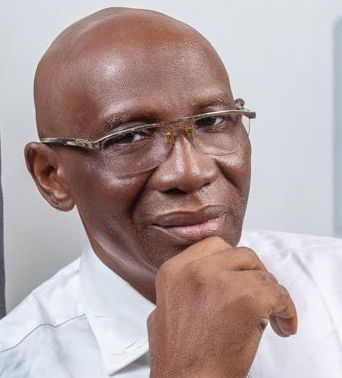

Engr. Akintunde Oviebo at 70: An Amazing Testimony of Grace, Faith and a Steady Walk with Christ
For Engr. Akintunde Oviebo, turning 70 is more than a milestone; it is a testimony of survival, redemption and the unfailing mercy of God. Raised in difficult circumstances in Ebute Meta, Lagos, he knew hunger and deprivation from childhood. Yet, despite working as a conductor, bakery worker and in other menial jobs, he remained determined to escape poverty through education. Against formidable odds, he eventually studied Mechanical Engineering at the University of Lagos and built a successful career in the oil industry, working in Lagos and Kano.
However, professional success also exposed him to a lifestyle of drinking, womanising and other excesses. His life took a dramatic turn when he lost his job during an industry restructuring and returned to Lagos, where he and his young family endured years of severe financial hardship. A failed sachet-water business compounded his frustration, and at his lowest point, despair became so overwhelming that he contemplated running away or taking his own life. It was in that valley of desperation that grace found him through the encouragement of his wife and his eventual encounter with the Full Gospel Christian Men Fellowship.
Today, decades after surrendering his life to Jesus Christ, Engr. Oviebo looks back with gratitude at how God transformed his story—from poverty to professional accomplishment, from recklessness to redemption and from despair to renewed purpose. He speaks openly about his childhood, career, family, struggles, salvation and the faith that has sustained him. In this revealing interview with Christian Benefits Magazine on the occasion of his recent 70th birthday celebration, Engr. Akintunde Oviebo shares the remarkable journey that has convinced him that God can turn even the most difficult circumstances into a testimony of grace.
How would you like to be introduced to our readers?
I am Engr. Akintunde Oviebo. I am a Mechanical Engineer. I worked with National Oil for about 20 years, in both Lagos and Kano, before leaving the company in 1998.
What singular thing are you most grateful to God for as you clock 70?
I am most grateful to God for calling me back to Himself. I lived a reckless life before I encountered Christ. God, in His mercy, brought me back and gave me another opportunity to serve Him.
Can you share your salvation encounter and how you came to Christ?
After National Oil went through restructuring, I eventually lost my job and returned to Lagos. That was around 1999. My wife had just completed her Master’s degree in Fisheries, and she was pregnant. Neither of us had a job.
We were living in a bungalow around Jemi Alade, Powerline, Idimu. Those were very difficult years. I started a sachet-water business, but it did not take us anywhere.
There was a time we survived on whatever we could find. At a point, I became so frustrated that I contemplated running away. I even thought about taking my own life. But my wife encouraged me. She told me that someone could help us, and eventually, she led me to Christ.
Before then, I had encountered a white-garment church through a contractor. The prophetess took me through several spiritual exercises, including bathing in a river to avert losing my job. Eventually, I lost the job. When she later told me she knew I would lose the job, I became angry because I felt I had wasted my time and resources.
That experience made me reluctant to have anything to do with churches, including Pentecostal churches. But God eventually brought me to the Full Gospel Christian Men Fellowship, and that changed my life.
What was your life like before you encountered Christ?
I was a drinker and a womaniser. I lived carelessly and enjoyed myself. I was comfortable professionally, especially when I was working with National Oil in Kano. I had a company apartment and everything seemed to be working well. But I was not living for God.
What helps you sustain your walk with Christ since you accepted Him till date?
Immediated I accepted Cgrist I became serious with God. I saw the transformation in my life and decided to build my life around the Word of God. I hold on to the Scriptures and continue to grow in my relationship with Him. God has been merciful to me.
Who were your Christian role models?
The fellowship meetings helped me greatly. I also watched Pastor E.A. Adeboye on television. His consistency and steadfastness inspired me.
At 70, how fulfilled do you feel looking back at your journey?
I feel very fulfilled. Those who trust God will never be forsaken. God has always taken care of my needs and has turned my story around.
Take us back to your childhood. What was growing up like?
I was born in Benin. My mother was Yoruba and my father was Edo. My grandfather did not want my father to marry my mother because she was Yoruba.
My mother eventually left for Lagos, and I grew up around Ebute Meta, close to where the Third Mainland Bridge is today. Most of the houses around us were wooden houses. The church was one of the few block buildings around there.
I attended St. Paul’s Catholic Primary School on Apapa Road. I trekked to school around Oyingbo.
We lived in a wooden room with my maternal grandmother and several other people. Sometimes, there could be four, five or even six of us in that room.
There were times we searched the garbage bins of Italian expatriates for leftover food. That was our reality. We were simply trying to survive.
My mother had four children, although one died. Because my father was largely absent, my maternal grandmother played a major role in raising us.
My childhood was basically about survival.
What values did your mother instil in you?
My mother and grandmother taught us moral values. My grandmother was a Muslim, and my brother and I attended Arabic school. But eventually, I discovered the truth in Christ.
They taught us discipline, resilience and hard work.
How did your early life influence your determination to succeed?
Poverty influenced me greatly. I did not want to remain poor. After my primary education, I went to Osogbo. Someone promised to sponsor my education, but the person later died.
I had to do different jobs. I worked at a car wash and did other menial jobs. Eventually, I attended St. Charles Grammar School, Osogbo. I also had to take care of my younger brother.
At some point, I worked as a conductor and also worked in a bakery. I attended technical school in the evenings.
All these experiences strengthened my determination. I wanted to escape poverty through education. I wanted to become an engineer.
How did you eventually become an engineer?
I attended technical school and later gained admission to study Mechanical Engineering at the University of Lagos.
After graduation, I got an opportunity to work with National Oil through someone who knew the manager. I was eventually posted to Ikeja and later worked as a depot supervisor and district engineer.
What was your experience when you received your first salary from National Oil?
I saw my first salary as too huge for me alone. I remember that I even left some of the money on the table because I could not believe I had earned that much.
At that time, I was not living for God. I was drinking, womanising and involved in other things. I enjoyed the comfort that came with my professional success.
Today, I thank God for delivering me from that life.
What lessons have you learnt from your difficult seasons?
Whatever you sow, you will reap. The Bible says so in Galatians.
I have learnt the importance of sowing into people’s lives, giving to God and helping others. During those difficult years, I told God that if He changed my story, I would worship Him and use whatever He gave me to serve other people.
God has been faithful to me, my wife and my family.
Tell us about the period you started the sachet-water business and later considered fish farming.
I told my wife that since she had experience in Fisheries, we should explore her strength. I wasn’t ready to look for any job. She also didn’t have a job at the time, so she agreed, and we started.
We bought about 50 fingerlings for ₦200. We didn’t have money to buy their food, so we gave them whatever we had. I had a very strong faith that God was going to take care of us, so we gave them whatever we ate, and they grew on it.
How did you cross paths with your wife?
It was in Kano. I was financially buoyant then. There was a friend who knew I was a womaniser. We used to have lunch together, and one day, he told me about a lady he wanted to introduce me to. I wasn’t interested at first, but things eventually took shape.
For how long have you been married?
We have been married for 28 years.
How would you describe the journey of 28 years in marriage?
It’s been wondrous.
Looking back today, what would you say is the greatest testimony of your life?
My greatest testimony is that God did not abandon me. He took me from a place where I did not know where my next meal would come from to a place of abundance.
I have experienced poverty, professional success, failure, disappointment and restoration. Through everything, God has remained faithful.
His grace has been sufficient for me. He turned my story from crumbs to abundance.
From a childhood of deprivation to engineering success and a transformed life in Christ, Engr. Oviebo Akintunde recounts the painful experiences that shaped his journey of faith, perseverance and grace.
For Engr. Oviebo Akintunde, turning 70 is far more than a celebration of age. It is a testimony of survival, redemption and the unfailing mercy of God. His story is one of remarkable contrasts: from growing up in severe deprivation in Ebute Meta, Lagos, where he and his siblings searched for food in the garbage bins of Italian expatriates, to becoming a qualified engineer and building a comfortable life through his career in the oil industry.
“We survived on leftovers from the garbage bins of Italian expatriates,” Akintunde recalls of his childhood. Those words capture the harsh reality of the circumstances in which he grew up. Raised largely by his maternal grandmother after his parents separated, he experienced poverty at a level that made survival his primary concern. Yet, despite the difficulties, he held on to a determination to educate himself and escape the circumstances into which he had been born.
His journey, however, did not end with professional success. After about two decades in the oil industry, he lost his job and was forced to confront another difficult chapter of his life. The comfortable existence he had known in Kano suddenly disappeared, and years of struggle followed in Lagos. At the lowest point of that period, with his wife pregnant and both of them without jobs, Akintunde says he contemplated running away or taking his own life.
It was in that season of brokenness that he encountered Christ. He cried out to God, promising to serve Him for the rest of his life if He would deliver him from his predicament. Through the influence of his wife and his eventual involvement with the Full Gospel Christian Men Fellowship, his life began to take a new direction. He also confronted the habits that had characterised his former life, including drinking, womanising and drugs.
Today, at 70, Akintunde looks back with gratitude and describes his journey simply as the work of God’s mercy. A committed member and District Coordinator of the Full Gospel Christian Men Fellowship, he believes that the God who brought him through childhood deprivation, professional setbacks and personal struggles ultimately used those experiences to prepare him for a life of faith and purpose.
In this interview with Christian Benefits Magazine on the occasion of his recent 70th birthday celebration, Engr. Oviebo Akintunde opens up about his difficult childhood, the determination that drove him to pursue education and become an engineer, his years in the oil industry, the crisis that preceded his encounter with Christ, and the faith that has sustained him for more than two decades.
How would you like to be introduced?
My name is Engr. Oviebo Akintunde. I am from a mixed Edo and Yoruba background. My mum is from Osogbo, Osun State. I grew up both in Lagos and Osogbo, although I don’t really have much association with Edo State.
How does it feel clocking 70?
I give glory to God. If it had not been Christ, I don’t know where I’d be today. I worked with the National Oil Company as an engineer, both in Lagos and Kano States, and left the oil company in 1998. I worked there for about 20 years.
What singular thing are you grateful to God for as you clock 70 years on earth?
I’m grateful to God for calling me back in His mercy. I lived a reckless life until the time I was saved by Jesus Christ, and God has been so faithful ever since.
I am a member of the Full Gospel Christian Men Fellowship, and I am currently a District Coordinator of the South-West 6 District.
Can you share your rebirth encounter?
It happened when National Oil asked some staff members to resign. National Oil and Shell were partners at the time, and Shell was about to pull out of Nigeria. So, we were all asked to voluntarily resign, with the promise of a good package.
I didn’t see the reason for it because my boss at the time told me I wouldn’t be affected, so I stayed calm. But by the time the process started, it affected my department. They proposed contract offers, and I was eventually affected.
I wasn’t a believer at that time, although I attended a Catholic church. I only went to church for frivolous reasons, actually. In fact, I was known as a womaniser and a drunkard. Before the retrenchment process happened, I was already married.
Meanwhile, when it happened, I was the engineer in Kano, but we eventually had to leave. Throughout my 10 to 15 years’ stay in Kano, I lived in the company’s apartment. I was comfortable, so when things changed, it caused me to become humble.
Eventually, we came to Lagos in 1999. Before then, I had been transferred from Kano to Lagos. I had only spent a year in Lagos and was still transferring my belongings when it happened.
One of the contractors took me to a white-garment church. We did everything to reverse the staff lay-off exercise, but it eventually happened.
The prophetess of that white-garment church later told me that she knew it would happen—that I would be laid off by the company. I got furious and wondered why she had allowed me to waste my time undergoing spiritual exercises in her church to avert my being laid off by the company.
I was still an unbeliever, and with my background in the Catholic Church, I didn’t want to have anything to do with the Pentecostal church.
When we came to Lagos, we didn’t know where to start from, and things were tough for about seven years. My wife, who had just finished her Master’s degree in Fisheries before we moved out of Kano, endured with me.
When I tried everything I could to retain my position in Kano and it didn’t work, I gave up on the company as a whole.
I had four buses which I wanted to bring to Lagos, but none of them got to Lagos. In retrospect, I saw that the Lord wanted to humble me. According to Deuteronomy 8:3, I see how God wanted to humble me. He knew where He was taking me to, and the first thing God does when He calls us is to humble us.
Everything I tried to do didn’t work well. My wife and I struggled through that phase, which was a contrast to our life experience in Kano.
My wife was a believer and was pregnant during that period. One night, I looked at her and wondered what I would do if she suddenly went into labour. A thought came to my mind to run away or commit suicide. A lot of terrible things were going on in my mind, and I didn’t know when I started shedding tears.
To complicate matters, we were both jobless at the time. We were living in a bungalow at Yemi Alade, along Powerline, Idimu, Lagos.
I suggested that we start a sachet-water business, so we started together, with no staff member. After packaging the water, I went around to supply it to people, even at a reduced rate, but nobody bought from us except an old woman. She would buy about four bags and pay in instalments.
One night, while working, I worried again about my wife’s labour. I got broken and told God I would serve Him for the rest of my life if He took me out of that situation.
I was in tears when my wife came in. She asked what was going on and, after I explained how tired I was, she said there was someone who could help.
After a couple of back-and-forth discussions, I eventually gave in, and she led me to Christ.
We were still attending the Catholic Church until I got tired and told her we needed to find another church. Along the way, the Full Gospel Christian Men Fellowship came to my mind. It was on my street.
They were sharing a magazine called Voice Magazine, and it always had a section containing testimonies from people.
I was still drinking and womanising even at that time, but I didn’t have enough money anymore to drink as much as I used to.
When the Full Gospel Men Fellowship came to our street, I told my wife how much I liked them and that I wanted to join their meeting.
Eventually, I joined them, and I have remained a committed member of the fellowship from then until today.
How would you describe your walk with Christ from then till now?
It has been wonderful. Our God is merciful. He has turned my story around.
After giving your life to Christ, were there some old sinful habits you struggled with? How did you eventually overcome them?
My drinking habit.
At the time, we were still building our house. I was asked to go and look at the soakaway that was being constructed and later go and pray with someone.
Here and there, I told God that I would stop drinking.
After that, things started taking shape again. When I took one big stout, it was like taking poison, and that’s how I stopped drinking. It has been about 20 years now.
Who were those you looked up to as role models in the faith after you accepted Christ?
Every weekly meeting built me up. I watched Pastor E. A. Adeboye more on television. I made up my mind to walk steadfastly with God because I’ve seen how merciful He has been to me, and I wouldn’t turn back from following Him.
What has steadily sustained your faith since then till now?
I’d not say it was somebody who did it. I got serious in my walk with the Lord, and I said to myself that I was going to hold on to God after seeing Him transform my life from nothing to something.
He took everything away from me and beautified my life. I built my life on the Bible, and I said this Word of God would not depart from me.
How fulfilled are you in life at 70?
I’m so fulfilled because the Bible says that for those who trust in Him, He will never leave nor forsake them.
God has taken care of every one of my needs ever since I surrendered to Him.
Where were you born, and how was your childhood?
It was terrible. I was born in Benin. My mother was Yoruba and my father was an Edo man. He had many wives. His father didn’t want him to marry from Yoruba, even when she was already pregnant.
My mother didn’t stay with my father, so she left for Lagos.
I grew up in Ebute Meta, near the Third Mainland Bridge, Lagos. Back then, there was no single block house in that area except wooden houses. The only block house was a church, which is still there.
I grew up in a mud house and attended Saints Paul Catholic Primary School, Apapa Road, Ebute Meta.
It was interesting. When we closed from school, we would trek to Oyingbo. We lived in one wooden room with my maternal grandmother. There were about four to six of us living in that one wooden room.
We used to search for leftovers in the garbage bins of Italian residents in Ebute Meta. We fed on crumbs and leftovers. That’s the way it was. I didn’t see anywhere help was going to come from.
From my mother, we were four children: two from my father and two from another man my mother remarried. One of us died.
I was single-handedly raised by my maternal grandmother. My father didn’t even care.
For me, childhood was all about survival. It was a very terrible life.
What are some of the values your mother instilled in you while growing up?
She and my grandmother instilled a lot of moral values in us.
My grandmother was a Muslim, and because we lived with her, my brother and I were Muslims. We went to Arabic school.
I wanted to please my grandmother until I came to understand the difference between knowing Christ and not knowing Him, and I saw the truth.
Aside from your mother and grandmother, who were others who played significant roles or had an impact on your early life?
After my primary school, we left Lagos for Osogbo.
When we got to Osogbo, the man who had promised to take me to school died. He worked in a car wash to be able to survive.
I did several very odd jobs in my early teens. I attended Saint Charles Grammar School, Osogbo. I managed to take care of myself and my younger brother.
Everybody went their own way; you had to struggle for yourself.
What experiences shaped your educational and career journey?
I was doing everything to educate myself, including some things people shouldn’t hear about.
I was a conductor and did other odd jobs because I wanted to be educated. When I finished secondary school, I also had to see myself through school.
I left Osogbo and was working in a bakery to take care of myself. In the evening, I’d go to a technical school. I’d work for people to survive.
In the face of all these challenges while growing up, did you have any future ambition?
I faced a lot of things. I wanted to get myself out of poverty, and the only thing I was seeing was education.
I wanted to be an engineer.
There are things I don’t want to remember. I was very disciplined and diligent. I told myself nobody would help me become what I wanted to become.
I always believed that I needed to do something for myself to get out of that situation.
When people are talking about the bad situations in Nigeria, it didn’t just start today. It’s been going on for a long time.
I didn’t have a job. I used to think there was a curse on me until I met Christ.
It was amidst all these challenges that I told myself I would do something with my life. That’s why I didn’t marry early.
How did you eventually achieve your dream of becoming an engineer?
I attended a technical school before proceeding to the University of Lagos (UNILAG), where I studied Mechanical Engineering.
When I finished at UNILAG, someone linked me up with a job. That marked my turning point.
I met a lady at the workplace, and we became just friends. She was very influential with the managers. When she heard my story as a graduate, she said she’d do something about it.
She gave my work to a manager who was her boyfriend. I was posted to Ikeja, where I worked as a depot supervisor and district engineer.
The first day you got the job at National Oil, how did you feel?
The first salary, I felt it was too much, so I left it on the table.
It was because I didn’t enjoy what my peers enjoyed. I started drinking, and that’s how I got into womanising and drugs.
But I thank God for His mercy; He delivered me from them.
What role has faith played throughout your life till now?
I learnt something: that we should start sowing seeds into people’s lives—giving to God and giving to people.
The Book of Galatians says whatever a man sows, he will reap.
My walk with God kept going. I told God that if He ever changed my story, I would worship Him and give myself to His work.
God has been faithful to me and to my wife.
What happened to the water business you fell back on when you left the oil company?
I got to a point and told my wife that the water business couldn’t take us anywhere.
I called her one day and told her that she had studied Fisheries and that I couldn’t have been going around at that age. I said we should try to do fish farming.
We got a tank and turned it into a fish pond.
My wife came from Lagos State, and she’s from an average family. God gave her to me.
She used to go to her father, who retired from Union Bank, as well as her mother. My father-in-law said, “This man is not learning anything,” and that I was too comfortable.
He told his daughter that since she was married, she should come to him.