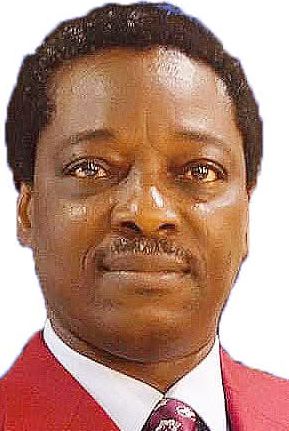

As insecurity continues to dominate national discourse, the General Overseer of Jesus Liberation Ministries, Apostle Oladele Johnson, says effective government communication and the establishment of state police are critical to strengthening national security and restoring public confidence. In this interview with Christian Benefits Magazine, he also reflects on the remarkable testimonies recorded in his ministry during the first half of 2026, the First Lady’s entrepreneurship initiative, the Oyo kidnapping saga, and other issues of national importance. Excerpts below
How would you describe God’s move in Jesus Liberation Ministries during the first half of 2026?
We have witnessed the wonders of God on this mountain. We have seen outstanding miracles; people getting married successfully, families receiving the fruit of the womb after years of waiting, businesses flourishing, and many people securing gainful employment.There is a particular brother who joined this ministry as an Uber driver. After embracing the Word of God and remaining steadfast in faith, he now drives a Toyota Venza and handles business transactions worth millions of naira. We have also witnessed remarkable healings and health restoration, including testimonies of people recovering from serious kidney-related illnesses.
Aside from being a preacher of the gospel, you are also a public affairs analyst. What is your view on the controversy surrounding the First Lady’s recent advice encouraging Nigerians to venture into akara and kulikuli businesses for self-empowerment?
There is absolutely nothing wrong with encouraging people to sell akara. There was a popular woman who sold akara along the Ondo–Ore Road. After her death, her children continued the business. Through that akara business, that old woman built a magnificent house. Akara is a business that can even be expanded to the level of exportation. Most of those who criticised the First Lady’s advice, especially members of the opposition, did so mainly to discredit the ruling party.
The First Lady never suggested that government funds should be used to establish akara businesses. Rather, she explained that she intended to use her personal resources to support akara and kulikuli sellers as a way of empowering and encouraging micro, small and medium enterprises (MSMEs). That is where I differ with many politicians who discredit any sincrere efforts of the government of the day because of politics.
The Oyo kidnapping saga also generated national controversy, particularly after the victims were rescued and Governor Seyi Makinde called for an international investigation to the incident. What is your assessment of the incident?
When those children and their teachers were kidnapped, Nigerians rightly expressed outrage. Now that they have been rescued, some people are still making noise by demanding further investigations. That reflects another problem with our society. If you criticised the government when things went wrong, you should also commend it when it gets things right. Otherwise, your criticism loses credibility. It doesn’t matter which political party you belong to, fairness requires acknowledging both failures and successes.
How would you assess the Federal Government’s communication of its programmes, policies and achievements?
In my opinion, the government is not doing enough to communicate its programmes, activities, achievements and successes to Nigerians and the international community. The government cannot rely solely on the Nigerian Television Authority (NTA) to communicate its policies and expect the public to fully appreciate its efforts. Beyond NTA, it must effectively utilise social media platforms. Whether they like it or not, the opposition has mastered social media communication. In today’s digital age, the loudest voice often gets the greatest attention. If the opposition constantly highlights what it considers government failures, then the government must also consistently promote its achievements through the same channels. The government should boldly present verifiable facts on Facebook, TikTok, Instagram, X and other social media platforms, while encouraging Nigerians to verify every claim independently. The Bible says no one lights a candle and hides it under a bushel. Likewise, the government should not hide its achievements but should openly communicate them for public scrutiny and verification.
Some observers argue that President Bola Ahmed Tinubu himself is not engaging the public as frequently as former President Olusegun Obasanjo did through his regular presidential media chats. What is your opinion?
Former President Olusegun Obasanjo’s regular presidential media chats greatly enhanced public understanding of his administration’s policies and achievements. However, such engagements can only succeed when the President’s media and public relations team fully understands its responsibilities and performs effectively. Leading a complex country like Nigeria is not an easy task. I once jokingly remarked that anyone governing Nigeria would need to smoke Indian hemp to withstand the pressure, although, as a gospel minister, I certainly do not recommend drug use under any circumstance. I merely used that illustration to emphasise the enormous pressure associated with governing Nigeria. A leader must be firm, visionary and courageous enough to make difficult decisions. He must anticipate challenges and develop strategies to overcome them. While others sleep, a leader is expected to stay awake planning for the future. Sometimes frequent media chats may not even be necessary if the government’s communication machinery is effective across all media platforms. The Presidency already has a sizeable media team. What is required is a comprehensive and strategic communication plan. If necessary, the government should invest more in promoting its policies, programmes and achievements across all major social media platforms. It should not limit itself to NTA, AIT and Channels Television. Every available communication platform should be fully utilised.
In which areas of governance would you score President Tinubu highly?
One major achievement of this administration is that it has significantly expanded the powers of state governments.
Today, states have greater authority to generate and distribute electricity. Therefore, if electricity supply remains poor in any state, citizens should hold their governors accountable. Similarly, local governments are enjoying greater financial autonomy through direct federal allocations. Consequently, state governors should now bear greater responsibility for service delivery within their states. With increased financial resources and constitutional powers, they should be held accountable for their performance.
What is your view on the proposed State Police Bill aimed at strengthening security across Nigeria?
State police remain one of the most practical solutions to the lingering insecurity confronting many states across the federation.
Some people fear that governors may use state police to intimidate political opponents. Are those fears justified?
Every policing system operates within established laws and regulations. State police will equally be guided by constitutional provisions and operational guidelines. No system is completely immune from abuse. The solution is not to reject the idea but to continually improve the system through proper regulation, oversight and accountability until it functions as effectively as possible.
What about incorporating local vigilante groups into state policing?
Local vigilantes are essential to any successful state policing structure because they understand the terrain, culture and security dynamics of their communities. What is required is to properly recruit, train, equip, uniform and regulate them within a formal policing framework.
Some also fear that state governments may eventually use their police forces against one another. How realistic is that concern?
I don’t believe that is likely. State police would operate strictly within their respective jurisdictions. By law, no state police command should be permitted to operate outside its constitutional territory. Their primary responsibility would be to protect lives and property within their own states. I believe the legal framework and operational guidelines for state policing will be carefully designed to prevent conflicts between states. The United States, whose policing structure many people often cite, successfully operates multiple levels of law enforcement, including federal agencies like the FBI, state police, county sheriffs and local police departments. Nigeria can also establish specialised security units such as Forest Guards, Mining Police, Pipeline Protection Police and other specialised agencies where necessary, provided they are properly regulated.