

Developing emotional capacity means becoming emotionally strong enough to face life’s challenges without being overwhelmed by them. It does not mean you will never experience pain, fear, disappointment, or grief; rather, it means learning to respond with wisdom, faith, and self-control instead of reacting impulsively.
Life is filled with storms. These storms may come in the form of financial hardship, illness, betrayal, bereavement, family conflict, disappointment, rejection, or unexpected failure. While we cannot always prevent these trials, we can develop the emotional capacity to withstand them without losing hope, wisdom, or purpose.
Emotional capacity is the ability to understand, manage, and regulate your thoughts, feelings, and reactions in healthy ways, especially during difficult seasons. It is one of the greatest strengths anyone can develop.
1. Accept That Storms Are Part of Life
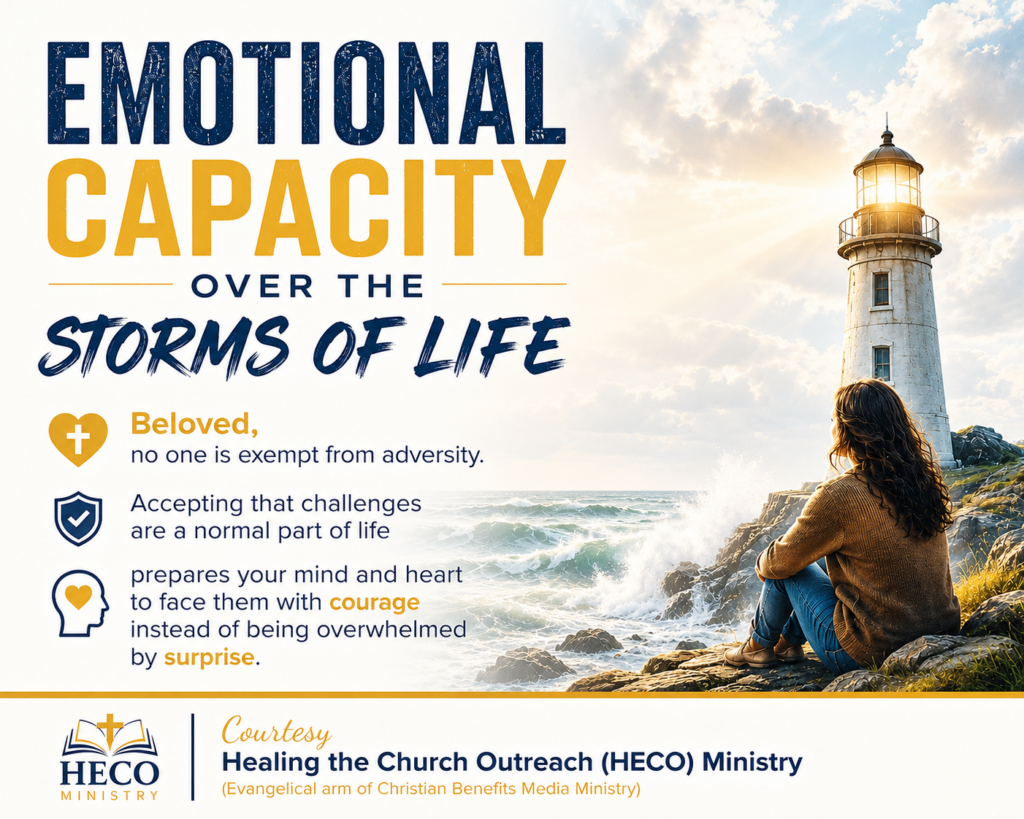
No one is exempt from adversity. Accepting that challenges are a normal part of life prepares your mind and heart to face them with courage instead of being overwhelmed by surprise.
Jesus Himself said:
“In this world you will have tribulation. But take heart; I have overcome the world.” — John 16:33
Acceptance is not surrender; it is the foundation of resilience.
2. Build Your Relationship with God
For Christians, emotional strength begins with spiritual strength. Through prayer, Bible study, worship, and trust in God’s promises, we receive peace that no circumstance can destroy.
God’s presence does not always remove the storm immediately, but it always provides the strength to endure it.
3. Develop Emotional Self-Awareness
Learn to recognize and understand your emotions honestly. Ask yourself:
- What am I feeling?
- Why am I feeling this way?
- Is my reaction helping or hurting me?
Self-awareness is the first step toward emotional maturity and healthy decision-making.
4. Control Your Response
You may not be able to control every situation, but you can control your response. Pause before reacting. Avoid making major decisions when you are angry, fearful, or emotionally overwhelmed.
True maturity is measured more by your response than by your circumstances.
5. Build a Healthy Support System
Surround yourself with people who encourage you, pray for you, and speak truth into your life. Healthy relationships strengthen emotional resilience, while toxic relationships drain emotional energy and weaken your resolve.
6. Learn from Every Storm
Every challenge carries a lesson. Ask yourself:
- What is God teaching me through this experience?
- How can I grow from this situation?
- How can this make me wiser, stronger, and more compassionate?
Pain becomes productive when it produces growth.
7. Practice Gratitude
Even in difficult seasons, there are blessings to appreciate. Gratitude shifts your focus from what you have lost to what God has preserved and provided.
A grateful heart is far more resilient than a complaining spirit.
8. Guard Your Mind
Your thoughts influence your emotions. Refuse to dwell on fear, bitterness, anxiety, or hopelessness. Instead, fill your mind with God’s Word, uplifting truth, and thoughts that strengthen your faith and inspire hope.
9. Develop Patience
Many storms do not end overnight. Emotional capacity grows as you learn to wait on God with faith instead of surrendering to anxiety or despair.
Patience is not passive; it is confident endurance built on trust in God.
10. Never Lose Hope
Hope gives us the strength to keep moving forward when circumstances seem impossible. Those who hold on to hope are better equipped to recover from setbacks and embrace new opportunities.
Always remember: every storm has an end, and every season of testing will eventually give way to a season of victory.
Conclusion
The storms of life are inevitable, but emotional collapse is not. By growing spiritually, managing your emotions wisely, cultivating healthy relationships, and trusting God through every season, you can develop the emotional capacity to overcome life’s greatest challenges.
Do not pray only for easier circumstances. Pray for greater wisdom, stronger character, deeper faith, and increased emotional capacity. As your emotional capacity grows, the storms may remain fierce, but they will no longer have the power to destroy your peace.
“The storm may shake your surroundings, but it does not have to shake your soul when your heart is anchored in God.”
Courtesy: Heal the Church Outreach (HECO) Ministry (Evangelical Arm of Christian Benefits Media Ministry)