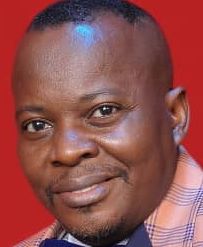


Four decades after surrendering his life to Jesus Christ and about two decades in November 2026 into church leadership, Rev. Olumide Olatunbosun Adeleke remains unwavering in his conviction that the Church’s greatest need is a return to Christ, genuine discipleship, and biblical holiness.
From his humble upbringing in a religiously diverse family and his dramatic salvation encounter as a secondary school student, to abandoning a promising career in accountancy in obedience to God’s call, his journey has been marked by sacrifice, perseverance, and an unwavering commitment to the supremacy of Jesus Christ.
In this exclusive interview with Christian Benefits Magazine, Rev. Adeleke reflects on his salvation experience, baptism in the Holy Spirit, spiritual formation, ministerial calling, and the challenges and triumphs of about twenty years in ministry.
He also speaks candidly on the state of the Church in Nigeria, the rise of false teachings and charlatanism, the place of authentic discipleship, the need for courageous spiritual leadership, and Nigeria’s prophetic role in the end-time revival.
Throughout the conversation, one message echoes consistently: the Church must return to Christ, for He alone is the foundation, the standard, and the hope of both the Church and the world.
How would you like to be addressed, sir?
I am Rev. Olumide Olatunbosun Adeleke.
Briefly share with us about your background and upbringing, including your salvation encounter.
I grew up in a mixed and polygamous family. My father was a Muslim, while my mother was a Jehovah’s Witness. I attended Odu Abore Primary School, Mushin; Ladipo Primary School, Mushin; and Mushin High School, Okota. I later attended Faith Theological Bible School, Sango-Ota, Ogun State.
Before enrolling at Faith Theological Bible School, I had begun my studies under the Institute of Chartered Accountants of Nigeria (ICAN). However, in the course of my studies, the Lord redirected me into the ministry.
I gave my life to Jesus Christ in 1986 while I was in secondary school. After the Christian Students’ Union fellowship on a Friday, my girlfriend and I were about to leave for home when she suggested that we attend the fellowship before going. During the preacher’s message, she whispered to me that everything he was preaching described the very things I was doing. At the end of the message, the preacher made an altar call. I responded immediately and surrendered my life to Jesus Christ that very day.
Coming from a Muslim background, did you suffer any persecution or rejection from your family because of your conversion to Christianity, particularly from your father?
As I mentioned earlier, my mother was a Jehovah’s Witness while my father was a Muslim. I did not experience any persecution or rejection from my family because of my conversion to Christianity. Ours was not a closely-knit home; everyone practically lived independently. As a matter of fact, all the children largely grew up on the streets, fending for ourselves and finding our own paths in life.
How would you describe the joy of salvation you experienced on the day you received Christ?
The joy of salvation I experienced is beyond human comprehension. It is something that cannot truly be explained unless it has been personally experienced.
It was exactly as the Bible describes in Acts 8:39: “And when they came up out of the water, the Spirit of the Lord suddenly took Philip away, and the eunuch saw him no more, and went on his way rejoicing.” That perfectly captures the joy of salvation I experienced.
Please share with us how you received the baptism of the Holy Spirit after your salvation.
I received the baptism of the Holy Spirit around 1990 while I was a member of a prayer group known as Prayer Foundation in Decross Gospel Mission.
After rededicating my life to Jesus Christ, I became eager to remain actively engaged in the things of God so that I would not return to my former lifestyle. Initially, I joined the choir in Decross Gospel Mission. However, because my singing voice was rather “unique” (laughs), the choir coordinator jokingly remarked, “I don’t want passengers here.” Those of us with “unique” voices were thoroughly embarrassed.
Rather than allow that experience to quench my zeal for God, I quietly left the choir and joined the ushering department. From there, I became part of the Prayer Foundation. It was during one of our prayer meetings in that group that I received the baptism of the Holy Spirit.
After receiving Christ, were there any old sinful habits you struggled to let go of, and how did you eventually overcome them?
There is no saint without a past, and I had mine too. One of the greatest struggles I faced after giving my life to Christ was my relationship with the opposite sex. It remained a major challenge even after I rededicated my life to Christ.
The turning point came when I read a book titled The Man God Uses. That book stirred in me a strong desire to confront the challenge. I later read another book titled If You Want to Be Free, Then You Must Renew Your Mind. Those two books greatly influenced my thinking and helped me understand the importance of renewing my mind according to God’s Word.
Beyond reading those books, I deliberately fed my mind with relevant Scriptural truths. Gradually, the yoke of fornication began to break.
That was the spiritual aspect of my victory. On the practical side, which I still maintain to this day, I set clear boundaries in my interactions with women. For example, whenever a woman comes to see me for counselling, my office door remains open. I do not counsel women behind closed doors because I know my area of weakness. I have learned that wisdom demands that I put safeguards in place so that the old man does not regain control.
You just mentioned your commitment to reading spiritual books. As a young believer, what other spiritual activities contributed significantly to your growth in the faith?
Apart from my active involvement in church activities, I devoured countless Christian books and sermon tapes. Those resources played a tremendous role in strengthening my spiritual life.
I was privileged to enjoy some of the best opportunities available at Decross Gospel Mission, particularly through its book department, Decross International Communication, at the Iyana Ipaja branch. Because I worked in the bookstore, I had access to a rich collection of books by renowned Christian authors and ministers such as Bishop David Oyedepo, Pastor W. F. Kumuyi, Rev. Uma Ukpai, Pastor E. A. Adeboye, Pastor Matthew Ashimolowo, Kenneth Copeland, Kenneth Hagin, Oswald J. Smith and Oswald Chambers, among many others. Those books made an immeasurable contribution to my spiritual development.
Beyond books, I attended numerous Christian programmes, seminars, conferences and retreats. I participated in several conferences organised by Pastor Matthew Ashimolowo, Dr. Myles Munroe and Kenneth Hagin. I also followed many of their teachings through recorded messages. In addition, Bishop David Oyedepo’s Breakthrough Seminars greatly enriched my spiritual life. In fact, I was one of the ardent followers of those seminars.
Can you recall some of your favourite Bible passages as a growing believer and explain the impact they had on your spiritual growth?
Several passages of Scripture profoundly shaped my spiritual journey.
One is Jeremiah 1:5–12, where God reveals His foreknowledge, calling and assurance to Jeremiah. Another is Romans 12:1–2, which teaches believers to present their bodies as living sacrifices and to be transformed by the renewing of their minds.
I also treasure Genesis 28:15, where God assured Jacob, saying:
“Behold, I am with you and will keep you wherever you go… I will not leave you until I have done what I have promised you.”
That promise has remained very precious to me.
Another passage that has continually kept me spiritually alert is Judges 16:20, where Delilah said to Samson, “The Philistines are upon you, Samson!” He awoke and said, “I will go out as at other times and shake myself free.” But he did not know that the Lord had departed from him.
That verse constantly reminds me never to become complacent. The fact that God is with you today does not mean you should take His presence for granted. Every believer must walk carefully before the Lord.
I also cherish 2 Samuel 1:21, where David lamented over Saul, saying:
“You mountains of Gilboa, let there be neither dew nor rain upon you… for there the shield of the mighty was defiled, the shield of Saul, no longer anointed with oil.”
That passage has always challenged me to guard my relationship with God diligently. These Scriptures have greatly strengthened and sustained my spiritual journey over the years
Were there things you had to give up as sacrifices in order to serve the Lord as a gospel preacher?
Yes, there was one major sacrifice.
As I mentioned earlier, I had already begun my studies with the Institute of Chartered Accountants of Nigeria (ICAN) before the Lord called me into the ministry. It had always been my dream to become a chartered accountant, and I was deeply passionate about that career. I had successfully completed the first stage of the programme when the call of God came.
At the time, I was working with Decross International Communication at the Iyana Ipaja branch. One day, I visited the head office at Shipeolu, Onipanu, Lagos. While I was attending to a customer, an elderly man approached me and asked, “Sir, do you work here?” I replied, “Yes.”
He then showed me his certificate and said, “I am a chartered accountant, and I am looking for a job. Please, can you help me?”
The man was close to sixty years old. I directed him to my boss, but immediately after he left, the Lord spoke to my heart and said, “Is this what you have been dreaming of because you think it is so lucrative? Here is a chartered accountant still looking for employment. If you surrender yourself to Me, you will not need to search for a job.”
That encounter settled the matter. From that moment, my ambition of becoming a chartered accountant gave way completely to God’s call upon my life.
Looking back now, do you have any regrets about abandoning your dream of becoming a chartered accountant in order to preach the gospel?
Not at all. I do not have the slightest regret. Rather, I remain deeply grateful to God. Even today, I still thank Him for giving me the courage to say, “Yes, Lord, I will serve You.”
How would you describe your walk with the Lord over these forty years since surrendering your life to Him?
As I mentioned earlier, I first gave my life to Christ during a Christian Students’ Fellowship meeting. However, because there was no proper follow-up, I eventually backslid.
In 1988, I rededicated my life to Jesus Christ at Decross Gospel Mission, Agege, Lagos, under the ministration of then Evangelist (now Bishop) Abraham Olaleye, who was pastoring the fellowship at the time.
It was during that period that I also met Apostle Bolaji Akinyemi at Decross Gospel Mission. We grew together in the faith, and he was one of the ministers God used significantly in laying the foundation of my Christian life and nurturing me during the early stages of ministry.
Since my rededication in 1988, by the grace of God, I have never turned back in my walk with the Lord.
How would you distinguish the experience of being born again forty years ago from what is commonly seen today?
What we see today regarding the profession of being born again is a matter of serious concern.
In those days, when people genuinely gave their lives to Christ, there was deep conviction of sin. Many new converts wept openly. They confessed both known and unknown sins with genuine remorse and a sincere desire to turn away from their old lives.
Today, however, many people come forward smiling casually during altar calls. Some even chew gum as they walk to the altar. Such attitudes often suggest a lack of genuine conviction. They indicate that the heart has not yet been broken before God in true repentance.
When there is genuine conviction at the new birth, it transforms every aspect of a person’s life. Therefore, I believe we, as preachers of the gospel, need to examine and re-examine the content and focus of our messages to ensure that they produce genuine repentance and lasting transformation.
At what point do you think the Church began to lose its effectiveness in raising genuine and sincere converts?
The Church began to lose its way the moment it shifted its focus from the central message of Christ.
When we started majoring on minor issues and neglecting the weightier matters of the gospel, we opened the door to what we see today—a growing number of people who profess to be born again without experiencing genuine transformation.
The way forward is simple: the Church must return to Christ. We must return to His message, His example and His priorities. That is the only way we can once again raise authentic disciples who truly know and follow Him.
Specifically, what do you consider to be the major problems facing the Church in Nigeria today, and what is the way forward?
The major problem facing the Church in Nigeria today is that many believers do not truly know whom they have believed. If we genuinely know Christ and understand His teachings, many of the things we witness today in the Church would naturally disappear.
The way forward is to return to the words and example of our Master, Jesus Christ, in truth, holiness and righteousness. Jesus said in John 12:32, “And I, if I am lifted up from the earth, will draw all peoples to Myself.” Therefore, let us lift up His name alone. Let us proclaim His message, not our own messages.
Secondly, we must return to genuine discipleship.
You earlier mentioned the issue of mentors and mentoring. Sadly, mentoring has taken on a dangerous dimension in many quarters today. Much of it is centred on things that are temporary and earthly. Many mentors now build empires around themselves instead of directing their mentees to Jesus Christ. Everything revolves around their personalities, their methods and their achievements.
We are not called to be the standard; Jesus is the standard. We are only to inspire people towards Him. Our responsibility is to teach people biblical principles and allow the Holy Spirit to help them apply those principles in their own lives through the Scriptures.
It should never become, “You must do it exactly the way I do it.” That only produces spiritual robots and duplicates. God never intended believers to become copies of men. We are to become followers of Christ.
In my opinion, the major challenge confronting the Church in Nigeria today is leadership. Once leadership returns to Christ and gets it right, the followers will respond accordingly.
Apart from that, how can the growing number of charlatans among preachers and church leaders in Nigeria be controlled or curtailed?
Can charlatanism in the Nigerian Church be controlled? My answer is both yes and no.
I say no because Nigeria operates an open system where virtually anyone can establish a church or ministry. In that sense, absolute control may not be possible.
However, I say yes because it can certainly be curtailed.
If respected fathers of the faith such as Pastor E. A. Adeboye, Bishop David Oyedepo, Pastor W. F. Kumuyi, Bishop Mike Okonkwo, Brother Gbile Akanni, Baba Abina of GOFAMINT, Rev. Emiko Amotsuka, Pastor Ayo Oritsejafor and others of similar standing take a firm and united stand for righteousness within their various spheres of influence, the activities of charlatans can be significantly reduced.
These leaders need to ask themselves some fundamental Kingdom questions: What kind of Church do we want to hand over to the next generation? What legacy do we want to leave behind?
I deliberately will not bring either the Christian Association of Nigeria (CAN) or the Pentecostal Fellowship of Nigeria (PFFN) into this discussion for obvious reasons. Nevertheless, if the recognised fathers of the faith sincerely acknowledge the true condition of the Church and unite around biblical values, they can develop practical measures that will help curb these unhealthy practices.
They can also speak with one united prophetic voice to the Body of Christ.
Furthermore, they must not shy away from necessary confrontation. Avoiding confrontation only gives error room to flourish.
Consider Elijah. He confronted King Ahab boldly. When Ahab called him “the troubler of Israel,” Elijah replied, “I have not troubled Israel, but you and your father’s house have, because you have forsaken the commandments of the LORD and have followed the Baals” (1 Kings 18:17–18).
The Church in Nigeria has reached a point where courageous, biblical confrontation has become necessary. If our spiritual leaders will rise to that responsibility, I believe the Nigerian Church will experience genuine awakening and revival.
There is a particular elderly preacher who, in recent years, has publicly spoken against what he considers unhealthy practices within the Nigerian Church. While many appreciate his courage, others regard his approach as controversial. What is your assessment of his approach?
When I listed the respected fathers of the faith earlier, I should actually have mentioned his name as well.
If I am to be completely honest, he is one of my favourite ministers. I love and respect him greatly.
As I have said before, I will always remain grateful for the privilege of passing through Decross Gospel Mission. It was on the platform of Decross that I first encountered this great servant of God. During one of his ministrations there many years ago, he prayed for me and laid hands on me.
I believe what he is doing is good. However, as I mentioned earlier, if the fathers of the faith had a recognised forum where they regularly discuss these sensitive Kingdom issues among themselves, many of the concerns now being expressed publicly could first have been addressed privately.
The reason he speaks publicly is that such a platform hardly exists, and someone has to raise the alarm.
At the same time, wisdom must always guide our approach. As the saying goes in politics, “If you fight corruption, corruption fights back.” That is largely what we are witnessing in the reactions to his position, especially from some of his fellow senior ministers.
There is a long-standing prophecy that Nigeria will play a major role in the end-time revival preceding the return of Christ. Would you say the Nigerian Church is prepared for that role?
That prophecy still stands. However, if I must be sincere, I do not believe Nigeria is adequately prepared.
In fact, I believe one of the reasons we are witnessing the present challenges within the Nigerian Church is because of that very prophecy. The greater the destiny, the greater the opposition.
Nevertheless, judging by what is happening in the Church today, Nigeria is not yet ready for the role God has ordained for her in the end-time revival. That is why I believe those who are recognised as fathers and authorities in the Body of Christ must come together, ask themselves serious Kingdom questions about the state of the Church in Nigeria, and collectively chart a biblical way forward.
In the course of about twenty years in ministry, have you ever considered quitting because of pressure, unfulfilled expectations or other challenges?
No, I have never considered quitting the ministry.
The reason is rooted in what God told me at the very beginning of my calling: “The palace is not for man but for God.”
From the outset, I have never seen myself as the centre of this ministry.
Many years ago, when the church was still meeting in front of my house, I remember one Sunday morning while I was still preparing for the service, my wife called to inform me that all the members had already gathered and were waiting in the church.
I replied, “Those people did not come to meet me; they came to meet God. God is already there.”
That has always been my conviction. This ministry is not about me; it is about God. The Church is built around Jesus Christ, not around any man.
Because Christ remains at the centre, I have never contemplated leaving the ministry.
Certainly, there have been difficult seasons. However, like David, I have learned to encourage myself in the Lord. The Bible says in 1 Samuel 30:6, “But David strengthened himself in the LORD his God.”
Many times, I simply sit on the floor before God and say, “Lord, this is Your work. You told me from the beginning that the palace is not for man but for You. Therefore, handle it Your own way.”
And God has never failed us. He has continually made a way where there seemed to be no way.
To His glory, He has also blessed us with wonderful church members, whom we call The Valuables. They have consistently stood by the ministry, supporting the work of God and contributing in their own various ways to move it forward.
What informed the name of the church, Christ Is Omnipotent Assembly?
Interestingly, that was not our original name.
The first name we submitted for registration with the Corporate Affairs Commission (CAC) was Jesus Is Assembly. However, the officer handling the registration said the name did not make complete grammatical sense unless it formed a complete statement.
Our lawyer then suggested Jesus Is Omnipotent Assembly, and that was accepted.
The inspiration behind the name goes back to my days in Prayer Foundation at Decross Gospel Mission.
One day, one of the sons of our General Overseer, Evangelist Dr. Ebenezer Obey Fabiyi, returned from the United States with a video message by Benny Hinn. During one of our Prayer Foundation meetings, we watched the message, which focused on the divinity of Jesus Christ.
In the sermon, Benny Hinn narrated an encounter with a university professor who challenged him to prove that Jesus is God. Through that experience, the Lord impressed upon him that Jesus is everything His people need Him to be.
That revelation settled deeply in my spirit.
I loved the expression “Jesus Is…” so much that I decided to register Jesus Is International Enterprise as the name of my business.
However, when the Lord later called me into full-time ministry and I asked Him what the ministry should be called, He said to me, “The name you registered for your company was never meant for your company. It was meant for your ministry.”
That was how we eventually arrived at the name of the ministry.
Jesus is whatever you need Him to be. If you need healing, He is your Healer. If you need deliverance, He is your Deliverer. If you need salvation, He is your Saviour. If you need a spouse, He is able to provide one. Whatever your need may be, Jesus is sufficient.
Is there a specific covenant upon which your ministry is built, and how has it shaped the ministry over the years?
Yes. As I mentioned earlier, God told me from the beginning that “the palace is not for man but for God.”
The covenant is simple: as long as I remain in my place and allow God to occupy His rightful place, I will continually witness His greatness in the ministry.
That is why, to this day, you will never hear me introduce myself as the General Overseer in a manner that competes with God’s ownership of the ministry. God occupies His rightful place here.
That is also why every message we preach is centred on the person of Jesus Christ.
I constantly remind our workers that anything which does not begin with Jesus should never be tolerated in this ministry, even long after I am gone.
If we desire to retain God’s presence and power, then God Himself must remain the focus. Christ must always be pre-eminent.
Upon receiving God’s call into ministry, what specific mandate did He give you?
Before I stepped into the ministry, I sought the face of God concerning His purpose for my life. The Lord spoke clearly to me, saying that my assignment was “to raise a new breed of believers with a passion for positive change of status through the Word, praise and prayer in the name of Jesus Christ.” That became the mandate upon which this ministry was established.
What gifts has God endowed you with to accomplish this mandate?
When God called Solomon, He endowed him with wisdom for the assignment. Likewise, when God called me, He made it clear that although the assignment was great, the palace is not for man but for God.
From that moment, He gave me the courage to let go of everything else in order to serve Him wholeheartedly.
Right from the beginning, I resolved never to see myself as the focus of this ministry. The ministry is about God, not about me. For over twenty years now, it has been a wonderful journey. There have certainly been seasons of challenges, but because God remains at the centre, He has continually levelled every mountain before us and filled our hearts with testimonies.
Can you recall some of the challenges you have faced in about twenty years of ministry and how God helped you overcome them?
The challenges have been innumerable. However, as someone once said, “Challenges are the breakfast of champions.”
I remember when we started the church in our living room. As the ministry began to grow, we moved our meetings to the frontage of our residence.
One day, while I was praying, a passer-by remarked within my hearing, “These people are simply looking for what to eat.”
I took that statement to the Lord in prayer, and He said to me, “Do not worry. Just keep doing what I have asked you to do.”
In the fullness of time, God vindicated His work. Many of those who initially mocked the ministry later came back to apologise.
Another memorable challenge was when we trusted God for land on which to build the church. I specifically told God that I wanted the property to be located on the same street where the ministry began.
Many people told me it was impossible. At one point, I almost believed them myself, so we paid for another parcel of land elsewhere. Unfortunately, the estate agent defrauded us.
Yet, in His faithfulness, God eventually provided this very property on the same street where the church first started.
That experience taught us never to limit God.
Beyond our spiritual assignment, we have always believed in demonstrating the love of Christ through practical acts of compassion.
For example, at the end of every year, we distribute bags of rice and other food items to members of the community. We are now moving beyond sharing rice to giving out live chickens as an additional way of blessing people.
That vision is one of the reasons we are trusting God for a campground. We want to create a place where both members and visitors can experience the grace of God—not only through the preaching of the Word and prayer but also through practical care and support.
Just as the apostles ministered to both the spiritual and physical needs of the people, we desire to do the same. The Bible records that they ministered to those in need and ensured that no one lacked among them.
Looking ahead, our vision over the next ten years includes developing the campground and acquiring a missionary bus that will enable us to expand our missionary outreach and take the gospel to more communities.