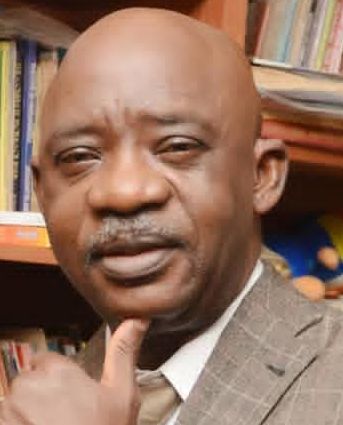

Diagnosis of sickle cell disease is often associated with pain, repeated hospital visits, and, for many, a shortened life expectancy.
Yet, for Rev. Kayode Aboderin, what began as a lifelong battle with illness became the foundation of an extraordinary testimony of divine healing and a lifelong commitment to the gospel.
In this exclusive interview with Christian Benefits magazine, the Senior Pastor and General Overseer of Faith Family Bible Church, Ojodu, Lagos, recounts his remarkable journey from the depths of sickness to supernatural healing
He reflects on the men God used to shape his spiritual life, recounts his call into ministry, and shares the vision and impact of the Joint Christian Ministers Crusade International (JCMCI) in taking the land for Jesus Christ. Excerpts below
First, how would you like us to introduce you to our readers?
I am Rev. Kayode Aboderin, the Senior Pastor and General Overseer of Faith Family Bible Church, Ojodu, Lagos, and the Convener of Joint Christian Ministers Crusade International (JCMCI).
Kindly give us a brief overview of your background, your salvation experience, and your call into ministry.
I was born and raised as a sickler, living with sickle cell disease. My mother was deeply troubled by my condition. At that time, I was not born again. In search of healing, she took me to a native doctor. Unfortunately, instead of helping me, the native doctor exposed me to what I would describe as the spirit of sorrow.
That experience made me realise that many mentally unstable people you see on the streets may actually be under the influence of a spirit of deep sorrow. They may appear to be laughing, yet inwardly they are overwhelmed by grief. My own life became miserable.
Because of my health challenges, I joined a white garment church, hoping to find healing. Rather than improve, my condition became worse.
Then my elder brother gave his life to Christ. He invited me to the University College Ibadan (UCI) Christian Fellowship, where I heard the gospel preached for the first time. After I surrendered my life to Jesus Christ, I had a life-changing encounter with the Holy Spirit that gave me an unshakable conviction.
From that moment until today, I have remained passionate for Jesus Christ. Never once have I entertained the thought of returning to the world.
Apart from Rev. Paul Jinadu, who led you to Christ, in one of our previous interviews you mentioned the significant role played by Rev. Emiko Amotsuka in your steady spiritual growth as a young believer. Could you recap the roles these two great men of God played in your salvation experience and growth in the faith?*
Rev. Paul Jinadu laid the foundation for my spiritual growth. He was an excellent pastor and a powerful preacher. I joined the Foursquare Gospel Church, Oke Bola, Ibadan, where he served as the Senior Pastor.
Even after giving my life to Christ, I was still very sickly. I continued to suffer from chronic sinus discharge and the spirit of sorrow. Sleeping was extremely difficult. I depended on medication just to get a few hours of sleep.
However, after I received the baptism of the Holy Spirit, God began helping me overcome both the sleeplessness and the spirit of sorrow.
Rev. Emiko Amotsuka became my father in the Lord. I first came into contact with him through The Word of Faith magazine. He introduced many Word of Faith teachings into Nigeria through the writings and messages of Kenneth Hagin, Kenneth Copeland, Oral Roberts, John Osteen, Fred Price and several other renowned ministers.
I made it a priority to stay close to him. Although I couldn’t afford to buy many of those materials, my relationship with him gave me access to read them.
The Word of Faith message helped establish a solid spiritual foundation in my life. I began to understand the power of God’s Word and the importance of meditation.
While I was still battling sickness, the Lord gave me a particular scripture:
“This is the day the Lord has made; I will rejoice and be glad in it.”
I kept meditating on and confessing that scripture repeatedly. After a while, the spirit of sorrow was broken. The sleeplessness also disappeared gradually. I began sleeping naturally—first for two hours, then three hours—and the duration kept increasing until I could enjoy normal sleep without medication.
The Word of God laid a firm foundation in my life and taught me the power that resides in God’s Word.
As much as I believe in the laying on of hands, no one laid hands on me for healing from those challenges. My victory came through remaining steadfast in the Word of God.
Tell us more about how you were eventually healed of sickle cell disease.
I was meditating on one particular scripture when the Holy Spirit impressed 2 Corinthians 5:17 upon my heart.
Beginning in 1978, I constantly meditated on and confessed the verse:
“Therefore, if anyone is in Christ, he is a new creation; old things have passed away; behold, all things have become new.”
I personalised the Scripture by saying:
“I, Kayode Aboderin, who used to be sickly, am dead. I am now a new Kayode Aboderin in Christ Jesus. Old things have passed away; all things have become new.”
I continued declaring those words faithfully. At that time, I wasn’t believing God for a change of genotype because I had never heard of such a miracle. All I desired was good health.
Then, in September 1981, I went for a routine medical examination at the University College Hospital (UCH), Ibadan. My consultant, Dr. Timehin, examined me and immediately observed that my eyes were no longer yellow. He knew something had changed.
Further laboratory tests were conducted, and to everyone’s amazement, my genotype had changed from SS to AS.
Medically, that was impossible.
Neither my consultant nor the other medical personnel could explain it. Even today, many still find it difficult to believe.
Like the man in the Bible who said, “Whereas I was blind, now I see,” my testimony is simple: God healed me.
In fact, it went beyond healing. God performed a miracle.
What is your response to the widely held belief that many people living with sickle cell disease die before the age of 25?
What I know is that God still performs miracles today.
I have seen people whose genotype changed. I have also seen others whose genotype remained the same, yet they experienced divine healing and went on to live healthy lives.
For example, I have a nephew who now lives in the United Kingdom. He also lived with sickle cell disease. Although his genotype did not change, he enjoys good health today.
Every case is unique. It is about your personal walk with God.
Whenever you hold firmly to the Word of God, He lifts you into the realm of the supernatural. If you consistently remain in the light of His Word, you will experience His supernatural power.
Aside from you, were there other members of your family who also lived with sickle cell disease?
Yes. Some members of my family also had sickle cell disease, and sadly, some of them died from its complications.
My father had an average level of education, while my mother was not formally educated. At that time, they knew very little about sickle cell disease. Even when I visited the University College Hospital (UCH), the doctors asked whether my parents were both AS or SS. I knew nothing about genotypes then.
Today, awareness has increased, and people now understand that two AS carriers should not marry each other. But in those days, most parents and families had little or no knowledge about genotypes. They simply watched their children die prematurely without knowing that sickle cell disease was the underlying cause.
To what extent would you say your healing from sickle cell disease shaped or influenced what you are today as a preacher of the gospel?
My miraculous healing gave me the confidence to encourage others to believe God for miracles. It strengthened my conviction that God still heals and delivers.
I can confidently tell anyone that if God did it for me, He can do it for them too.
Even the chronic sinus discharge I suffered was healed miraculously. It was a persistent wound that refused to heal and affected different parts of my body for about three years.
At the time, my consultant told me he had never seen anyone recover from that condition. Several surgical procedures were carried out to drain the sores, but they refused to heal.
The disease eventually spread to my brain and heart. From there, it affected my anus, testicles and penis. Humanly speaking, there was no hope of survival. By the time it attacked my private parts, the pain had become unbearable. I could hardly walk.
Then Jesus intervened.
Regarding whether my healing pointed to my call into ministry, I would say that the passion to serve God grew stronger after my miraculous encounter.
However, I did not initially want to become a full-time pastor.
My experience with Rev. Emiko Amotsuka and what I observed many pastors going through financially discouraged me. Besides, I came from a business-oriented background. I believed that, by God’s grace, I could become successful in business and use my resources to support the work of the gospel.
That was the path I initially chose.
I ventured into business while I was still an undergraduate and continued after graduating from the University of Ife (UNIFE), now Obafemi Awolowo University (OAU), where I studied Botany.
Initially, I did not even want to attend a university because I simply wanted to become a businessman. Later, I changed my mind. I told myself, “Let me at least earn a university degree so that no one will say I dropped out.” My intention was never to use the certificate to seek employment.
Since graduating in 1985, I have never used my degree to apply for a job.
While in the university, I also extended my studies by taking courses in Religious Studies, Psychology and Philosophy because I knew they would be useful if God eventually led me into ministry.
At what point did you formally receive the call into ministry, and what is the specific mandate God gave you?
Because of my passion for God during my university days, I served as the Bible Study Secretary of the Christian Students’ Movement (CSM) and later became its Vice-President.
I was consumed with the desire to turn the world upside down for Christ as an expression of gratitude for what God had done in my life.
At one point, I wanted to leave school and go straight into ministry. But my pastor, Rev. Paul Jinadu, advised me against it. He counselled me to remain in school and complete my education first.
Ironically, by the time I graduated, I no longer wanted to enter full-time ministry.
Business had completely taken over my mind. My vision was to become a successful businessman and use my wealth to finance the gospel.
After graduating, I established my business in Ibadan. Even during my National Youth Service, I had already acquired a duplex in Ibadan and employed several staff members.
After completing my youth service under the mentorship of Rev. Emiko Amotsuka, I expanded my business operations to Lagos.
It was during this period that I met Apostle Anselm Madubuko. At the time, he was not yet a pastor; he was practising as an architect. We eventually became business associates.
However, a time came when I began hearing the call of God.
The Holy Spirit repeatedly impressed upon my heart that it was time to enter full-time ministry.
Honestly, I resisted that call.
I tried everything possible to silence that inner voice. In fact, I deliberately ate four or five times a day, hoping to suppress the burden of the call. But the more I resisted, the stronger it became.
Eventually, the Lord withdrew my peace.
When I realised I could no longer ignore Him, I surrendered and went into three days of prayer and fasting.
On the very first day, the Lord gave me a vision.
I saw multitudes of people coming to Christ like a mighty ocean.
The Holy Spirit said to me, “This is what is about to happen in this nation, and your ministry will be part of it.”
Years later, when I attended one of the Holy Ghost Congresses of the Redeemed Christian Church of God and saw the massive crowd, I remembered that vision. What I saw then was a glimpse of what God had shown me years earlier.
At that time in Nigeria, hardly any church had a congregation of 6,000 people. Perhaps only Deeper Life Bible Church and Christ Chapel were approaching such numbers.
Today, we are witnessing the fulfilment of what God revealed.
When I finally surrendered to the call in September 1986, the Lord gave me specific instructions.
One of them was that I should relocate to Lagos.
Ironically, Lagos was the last place I wanted to live.
While running my business, I travelled frequently between Ibadan and Lagos, and I had no desire to settle in Lagos permanently.
I told the Lord, “Send me anywhere in the world, but not Lagos.”
Yet He insisted.
Even more specifically, He directed me to Ojodu.
At the time, I argued with Him. I felt Lagos already had enough churches and ministers.
But God remained firm.
He specifically instructed me to go to Ojodu because He had an assignment for me there.
*At what point did you formally receive the call into ministry, and what is the specific mandate of your calling?*
You see, because of the zeal God placed in my heart while I was at the university, I served as the Bible Study Secretary of the Christian Students Movement (CSM) and later became the Vice President of the movement.
I was passionate about turning the world upside down for Christ in appreciation of what God had done for me. At one point, I even wanted to leave the university and go straight into full-time ministry. However, my pastor, Rev. Paul Jinadu, advised against it. He counselled me to remain focused and complete my university education first.
Ironically, by the time I graduated, I no longer wanted to go into ministry. My passion had shifted to business. I desired to become a successful businessman who would finance the work of the gospel.
After graduating, I established my business in Ibadan. During my National Youth Service, I had already acquired a duplex in Ibadan and employed several staff members. After completing my youth service under the mentorship of Rev. Emiko Amotsuka, I expanded my business to Lagos.
It was during this period that I met Apostle Anselm Madubuko. At the time, he was not yet a pastor but an architect. We became business associates and worked together.
However, a time came when I began to hear the call of God again. The Holy Spirit kept ministering to me that it was time to enter full-time ministry. I resisted the call. In fact, I tried to silence that inner voice. I even ate four to five times a day in an attempt to suppress it.
Eventually, the Lord withdrew my peace. When I lost my peace, I knew I could no longer resist Him. I surrendered and embarked on a three-day fast.
On the very first day, the Lord gave me a vision. I saw multitudes of people coming to Christ like the waves of an ocean. The Holy Spirit said to me, “This is what is about to happen in this nation, and your ministry will be part of it.”
Years later, when I attended one of the Holy Ghost Congresses of the Redeemed Christian Church of God, I saw the massive crowd gathered there, and I remembered that vision. It was a fulfilment of what God had shown me.
At the time I received that revelation, there was hardly any church in Nigeria with a congregation of 6,000 people. Perhaps only Deeper Life Bible Church and Christ Chapel were approaching that number.
Regarding the specific mandate of my ministry, when I finally surrendered to God’s call in September 1986, the Lord gave me clear instructions. One of them was to relocate to Lagos.
Ironically, Lagos was the last place I wanted to live. While running my business in Ibadan, I travelled frequently between Ibadan and Lagos. When God instructed me to move to Lagos, I pleaded with Him to send me anywhere else in the world—but not Lagos.
I argued that Lagos was already saturated with churches and ministers. Nevertheless, God insisted and specifically directed me to Ojodu.
At that time, Ojodu was spiritually very dark. You could literally sense the intensity of spiritual activities in the area. Even my friends, including Rev.Tunde Joda and Apostle Anselm Madubuko, advised me against going there. They told me that whatever I could achieve elsewhere in one year would take ten years to accomplish in Ojodu.
Indeed, the work was very challenging.
We held prayer vigils every Friday and organised regular evangelistic crusades. As the congregation gradually grew, the Holy Spirit instructed us to engage in spiritual mapping and confront the spiritual forces influencing the land.
In preparation for this assignment, I led all my leaders into a season of spiritual exercises before we eventually relocated from Ikeja to Ojodu in 1988.
I came to Ojodu with only two evangelists. At the time, I was still unmarried.
As people gradually began coming to the church, we focused on building leaders and discipling converts. Thereafter, the Holy Spirit instructed us to undertake a more intensive spiritual exercise.
He led all our leaders into a seven-day dry fast. Every midnight during those seven days, we went from one junction to another, praying and breaking what we believed were the spiritual strongholds over Ojodu, Ogba, Isheri-Olowora, Omole, Magodo, Alagbole and Akute.
On the seventh day, we went to the Isheri River, where we learnt that traditional spiritual rites had been performed by some of the indigenous Awori people. Around 1:00 a.m., we entered the river, anointed it with oil, prayed fervently, and made prophetic declarations over the land.
We declared that the land belonged to Jesus Christ and that the gospel would flourish there.
Following those prayers, we began to witness remarkable changes. The area experienced rapid development, population growth and an increasing presence of churches.
The Lord had earlier told me that Ojodu, Ogba and Ikeja would one day become more prosperous than Allen Avenue. From 1988 onward, we began to see significant positive changes across the entire area.
Churches multiplied rapidly. Before then, many of the churches in Ojodu, including parishes of the Redeemed Christian Church of God and the Foursquare Gospel Church, struggled to survive.
However, after those seasons of prayer, spiritual mapping and prophetic declarations, we witnessed tremendous growth in the spread of the gospel and the overall prosperity of the community.
*Tell us about one of the arms of your ministry—the Joint Christian Ministers Crusade International (JCMCI). Kindly share its vision, aims, objectives, and impact on the Body of Christ since its inception.*
When the Lord called me, He told me that my first assignment was to break the powers that ruled the land. Having accomplished that, He then said it was time to take the land for Christ.
The Lord further impressed upon my heart that this assignment was not for Faith Family Bible Church alone. He made it clear that it was a mandate for all the churches within the community and its environs to unite in taking the land for Christ. That was how the vision of the Joint Christian Ministers Crusade International (JCMCI) was birthed.
I began inviting pastors and churches from different denominations in the community to join hands in this kingdom assignment. The very first crusade we organised drew an unprecedented crowd and had a tremendous impact on the area.
Among the guest ministers was Prophet S. K. Abiara, founder of Christ Apostolic Church (CAC) Agbala Itura. Initially, he declined our invitation, explaining that he had previously organised three crusades in Ojodu, all of which had failed. He even described Ojodu as a “no-go area” for him.
However, he eventually agreed to minister for just one day. When he arrived and witnessed the massive turnout, he remarked, “This is unbelievable.” He immediately changed his mind and requested to return the following day. In the end, he ministered throughout the three-day crusade.
It was a remarkable move of God that also featured other notable ministers, including Apostle Anselm Madubuko, among others.
Although we had been organising joint crusades for several years, the Joint Christian Ministers Crusade International (JCMCI) was formally inaugurated in 2006. Today, the ministry has existed for over two decades.
In the early years, our focus was solely on organising crusades. Over time, however, the ministry became more structured and expanded its activities.
At its core, JCMCI is committed to evangelism and revival. We now organise programmes such as the Hour of Purity and Prosperity, while continuing to trust God for a fresh outpouring of revival. Our prayer is that the Church of Jesus Christ will come alive afresh as more churches and ministers embrace the JCMCI vision.
We desire to witness an unprecedented manifestation of the Holy Spirit and a greater harvest of souls for the Kingdom of God.
*How supportive have Christian bodies such as the Christian Association of Nigeria (CAN) and the Pentecostal Fellowship of Nigeria (PFN) been to the JCMCI vision?*
We are very much a part of both the Christian Association of Nigeria (CAN) and the Pentecostal Fellowship of Nigeria (PFN). In fact, I encourage every JCMCI member to belong to both organisations and actively participate in their activities.
At the same time, JCMCI has its own distinct mandate, which is to unite the Church in taking the land for Christ.
Many members of CAN and PFN are also active participants in JCMCI. One of the unique mandates God has given us is to break down denominational barriers within the Body of Christ.
For that reason, JCMCI does not exclude any Christian denomination. We welcome believers from every Bible-believing tradition. For example, many pastors and ministers from white garment churches are active members of JCMCI.
Our emphasis is not on denominational identity but on advancing the Kingdom of God together. We believe that when the Body of Christ works in unity, the Church becomes stronger, revival becomes deeper, and more souls are won for Christ.