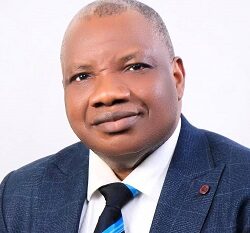


As God’s Mercy Revival Ministries (GOMERM) holds the maiden edition of its Building the Builders international Ministers’ Summit in 2026, on Saturday February 7, themed “REINVENTION,” the General Overseer, Dr. James Akanbi, charges fellow General Overseers to intentionally position their youths as the future leaders of their churches. Otherwise, he warns, such churches risk extinction—even within their lifetimes. In this wide-ranging interview with select media outlets, including Christian Benefits, Dr. Akanbi also shares insights on economic survival amid Nigeria’s evolving tax policies and other critical national issues. Excerpts:
Just as a recap, how will you describe God’s move and power in God’s Mercy Revival Ministries (GOMERM) in the just-concluded year, 2025?
God’s Mercy Revival Ministries (GOMERM) is God’s ministry. We are merely workers in His vineyard. I thank God that you described it as God’s move and power, and not the move or power of men—lest anyone, including myself, takes glory for what God has done. God’s move and power in GOMERM in 2025 were quite awesome, just as in previous years.
What are the basic testimonies or achievements of the church in 2025?
First, we were able to change the trajectory of the ministry as God directed us to begin to deliberately take care of posterity—the next generation of the ministry. As I often say any ministry where the set-man is above 55 years and 75% of the congregation is also above 55 has no future. Such a ministry is already dead. Knowing this reality, it became imperative to begin involving the generations coming behind us in leadership positions—starting now. In 2025, we established about 15 different youth hubs, essentially churches for the youth. These young people have done fantastically well. Their pastors are youths between the ages of 25 and 35, whom we have assembled and trained over the years. Once released, they hit the ground running. One of our greatest achievements in 2025 was giving our youth members a strong sense of identity. Every Sunday, they hold their own services between 8:00 and 10:00 a.m. By 10:45 a.m., they join the adult church. They worship in their own style, according to the structure we provided, and later merge with the main congregation to complete the full Sunday experience.
How do the church youth hubs relate to the special youth session during the yearly Zion Convention?
What we offer them during the convention is not sufficient on its own. At the Zion Convention, they have a full day dedicated to them, but that alone cannot achieve strategic development of the youths. When we talk about being strategic, we mean equipping them with what they will need for the future—preparing them to succeed us, even to “fire” the older generation out of leadership and take over. This cannot be accomplished through a microwave approach—once a year. Microwave food never supplies lasting strength. They need consistent nourishment that builds spiritual muscle and addresses the totality of human development. That is exactly what we provide for them throughout the year.
How does the church blend the older generation with Gen Z, considering differences in thinking and attitudes?
Fantastic question! I am a product of the older generation. I was 36 years old when God called me to start this ministry. Many of our members who are now 50, 55, or 60 joined me as young people. I was relevant to them then, and for many years afterward. At my current age, I must not deceive myself—I cannot be as relevant to a 25-year-old as I once was. I cannot fully understand their language, their mentality, or the intricacies that shaped them. Gen Z is powerful. They are unseating presidents and prime ministers across the world. They are forceful and naturally rebellious. Their potential cannot be suppressed for long; otherwise, rebellion becomes inevitable. The wisdom is to recognize what these young people carry and allow them to express it within a controlled environment—one that is godly, constructive, and not destructive.
Why shouldn’t Nigeria’s political leaders adopt the GOMERM model of grooming youths for future leadership instead of recycling old leaders?
One major challenge is the capitalist nature of governance. Politics is capital-intensive and often beyond the reach of the average Nigerian youth. However, the government should watch closely. The current generation is creating massive wealth through fintech, technology, AI, and the digital economy. These platforms are empowering youths financially. In the next five years, we will see numerous youth billionaires who will challenge the political status quo—money for money. I foresee a revolution where finance will play a pivotal role in governance and politics. Today, many youths earn hundreds of thousands of dollars weekly through digital platforms like YouTube. Within a few years, they will have the financial muscle to redefine leadership in Nigeria.
Some say politics is a dirty game that can pollute Christians. What is your view on Christians participating in partisan politics?
There are two schools of thought. One believes politics will corrupt Christians. The other argues that if Christians abandon politics to non-Christians, what happens to righteous governance? I believe we are now witnessing a higher level of awareness. Genuine Christians can participate in politics without being polluted. Some Christians are specifically called into governance. There are apostles in the marketplace, apostles in governance, and apostles in politics. God never leaves a generation without people called to specific sectors of national life. He chose David. He chose Daniel who functioned as a national administrator in a foreign land and excelled above the indigenes. The same anointing still rests on select individuals today. Christians who carry the anointing for politics must identify it and step out. When they do, the Church must rally around them. Unfortunately, the kind of money required in politics is not currently available within the Church. The devil understands governance systems. Even in developed nations like the United States and the United Kingdom, politics is impossible without money. In Nigeria today, contesting for governorship requires no less than ₦25 billion. Even a councillorship seat demands enormous resources. Those whom God has anointed for governance must rise, and the Church must support them intentionally. (continues)